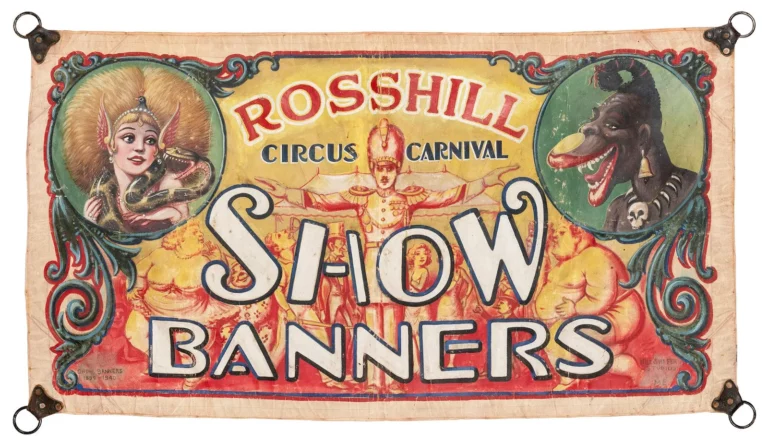
How to Identify Sideshow Banner Artists: What Every Collector Needs to Know
Vintage sideshow banners, the massive hand-painted canvases that once lined carnival midways — are one of the most exciting corners of American folk art collecting. They’re bold, oversized, one-of-a-kind, and increasingly hard to find.
They’re also commonly misidentified.
Fakes exist but are not extremely common. Buyers and sellers make assumptions based on a quick glance. Even published books have gotten attributions wrong. And when a banner is misidentified, it doesn’t just mislead one buyer, it sticks with the entire market.
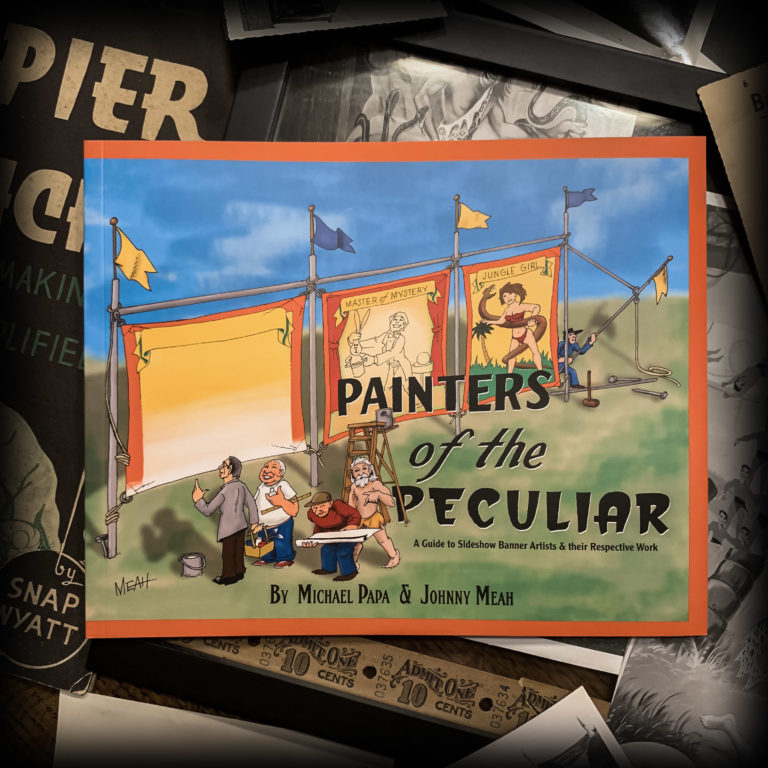
As co-author of Painters of the Peculiar: A Guide to Sideshow Banner Artists & Their Respective Work and owner of the Sideshow Banner Exchange, I’ve spent years studying, buying, selling, and authenticating these pieces. I’ve handled countless original banners and have seen just about every mistake the market can make.
Here’s what you should understand before you buy, sell, or try to identify a sideshow banner on your own.
Why Getting a Sideshow Banner Artist Right Matters
Not all sideshow banners are created equal. Every original banner is essentially one-of-a-kind, but that alone doesn’t determine value. Three factors drive what a banner is worth:
- The artist — This is a huge but not always deciding factor. Certain names command significantly higher prices than others.
- Condition — These banners were flown hard on midways in sun, wind, and rain. Condition varies wildly and can make the difference between $1,000 and $4,000
- Subject matter — Some acts and themes resonate more with today’s collectors than others.
Not understanding the true artist can greatly impact a sale. And if a banner has been misrepresented, intentionally or not, the consequences for a buyer can be serious.
The Artists You Need to Know
A handful of painters dominated sideshow banner art from the early 1900s through the late 20th century. Each had a distinctive style, but telling them apart takes more than a casual look. Here’s a brief overview of the major names.
Fred G. Johnson (1892–1990)
Johnson is the most recognized name in sideshow banner art. He spent 40 years painting for the O. Henry Tent and Awning Company in Chicago and earned the nickname “the Picasso of circus art.” His career spanned an incredible 65 years, and his banners appeared with Ringling Brothers, Barnum & Bailey, and at the 1933 Chicago World’s Fair.
Johnson’s work has a very specific look — from his painting technique, to his lettering choices, to the way he designed title elements and decorative details. Experienced collectors can often spot a Johnson across a room. Due to his similar style to Nieman Eisman, Johnson’s earlier work is often confused with Eisman.
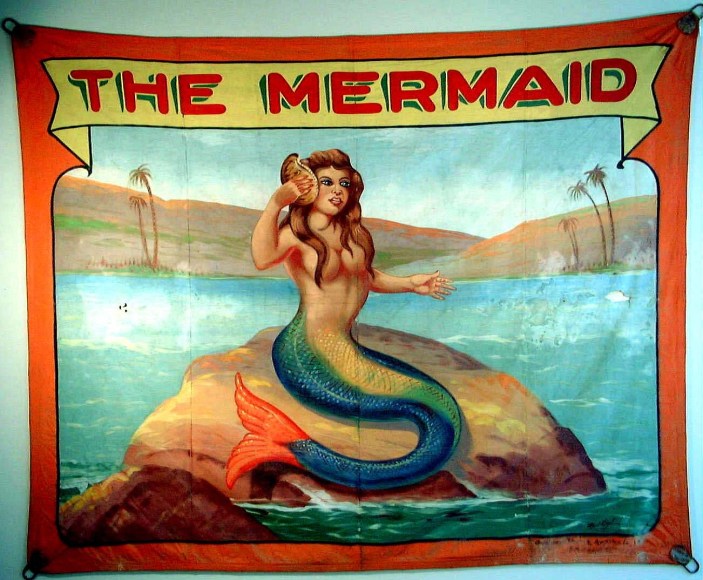
Snap Wyatt (1905–1984)
Snap Wyatt is arguably the most sought-after name among serious collectors. Born David C. Wyatt in Asheville, North Carolina, he ran away with the circus at fourteen and eventually became one of the most prolific banner painters of the 1940s and 50s, working from his studio in Tampa, Florida.
Wyatt’s style is unmistakably different from Johnson’s, and his banners have an energy and visual punch that influenced artists well beyond the carnival world. But the specific characteristics that confirm a genuine Wyatt versus a similar-looking banner from another artist? That takes a trained eye and hands-on experience with authenticated examples.
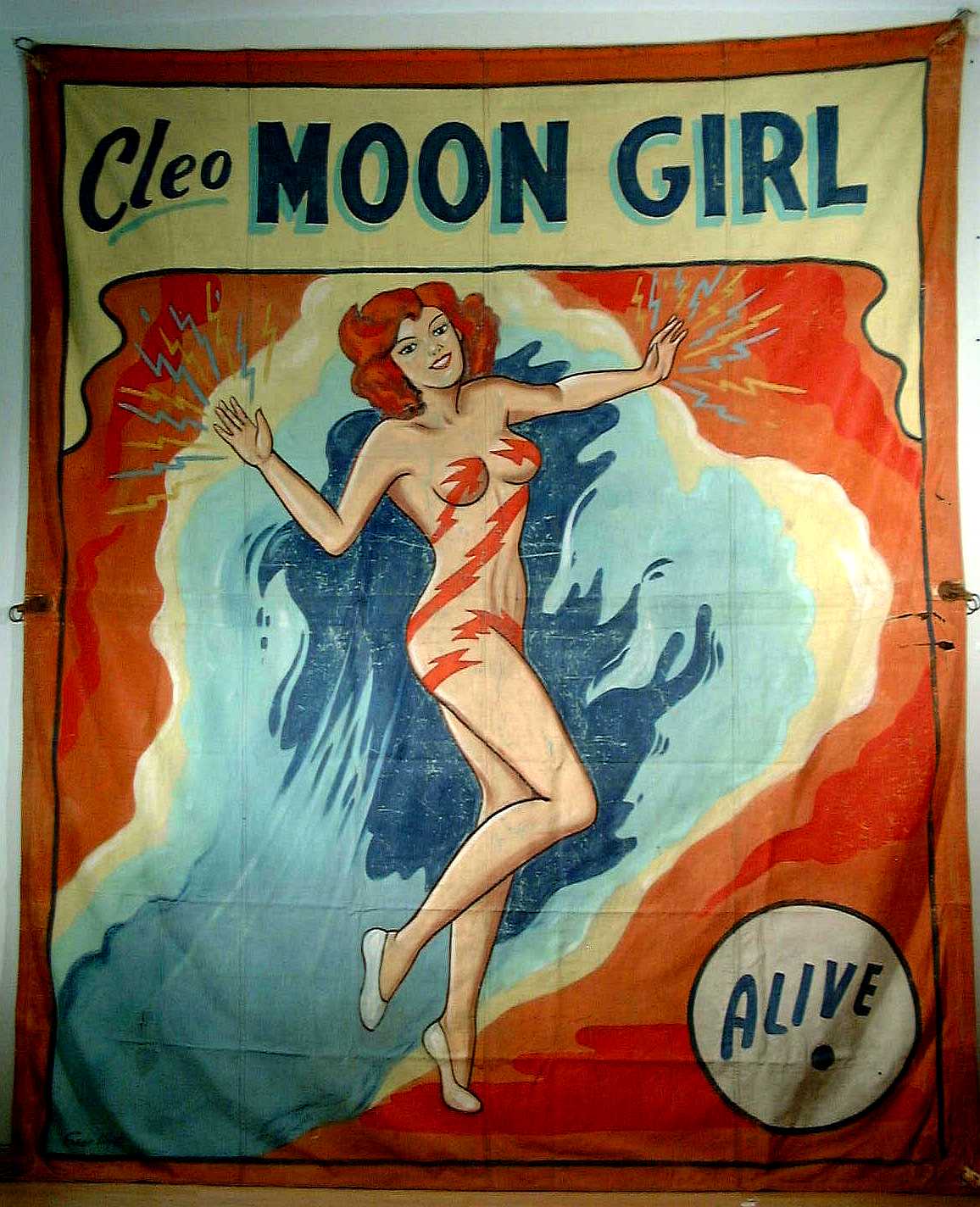
Clarence Sigler, Jack Sigler & Sigler and Sons
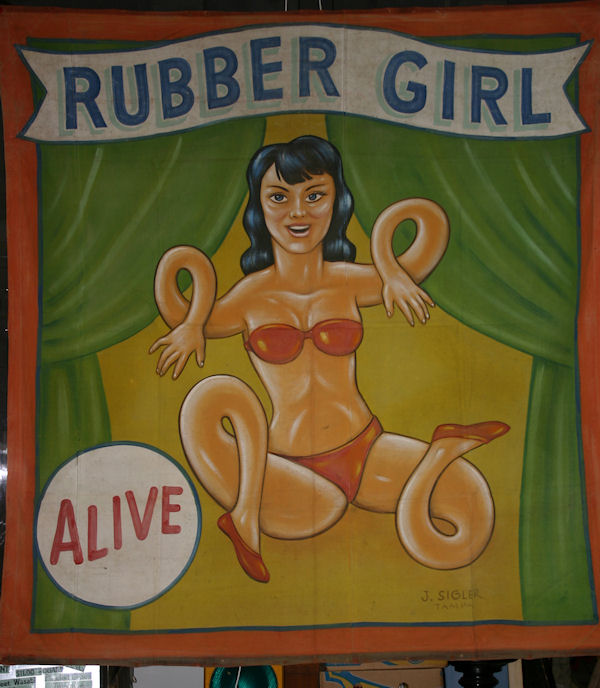
Operating out of Tampa, Florida, Sigler and Sons was one of the major banner studios. Many banners carry the “J. Sigler, Tampa” inscription, but that marking alone doesn’t tell the full story. The studio employed multiple artists and survived at least two generations of Siglers including Clarence, Jack’s father, which makes attribution far more nuanced than simply reading what’s written on the canvas.
Jack Cripe (1918–1992)
“Sailor Jack” Cripe lived one of the most colorful lives in carnival history, being a tattooist, performer, merchant seaman, and banner painter. He worked with Snap Wyatt and Bobby Wicks before joining Sigler and Sons in Tampa. His banners often carry collaborative markings, and sorting out his individual contributions from studio work requires real expertise.
Nieman Eisman
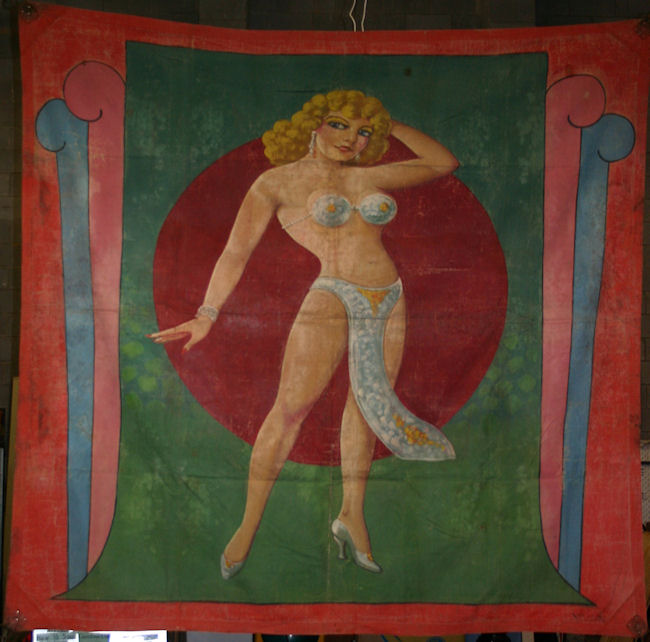
One of the earliest major banner painters, Eisman was active in Chicago from around 1910 and mentored the young Fred Johnson at the United States Tent & Awning Company. His banners are rare and highly collectible — but they’re also easy to confuse with early Johnson work if you don’t know the subtle differences.
Johnny Meah (b. 1937)
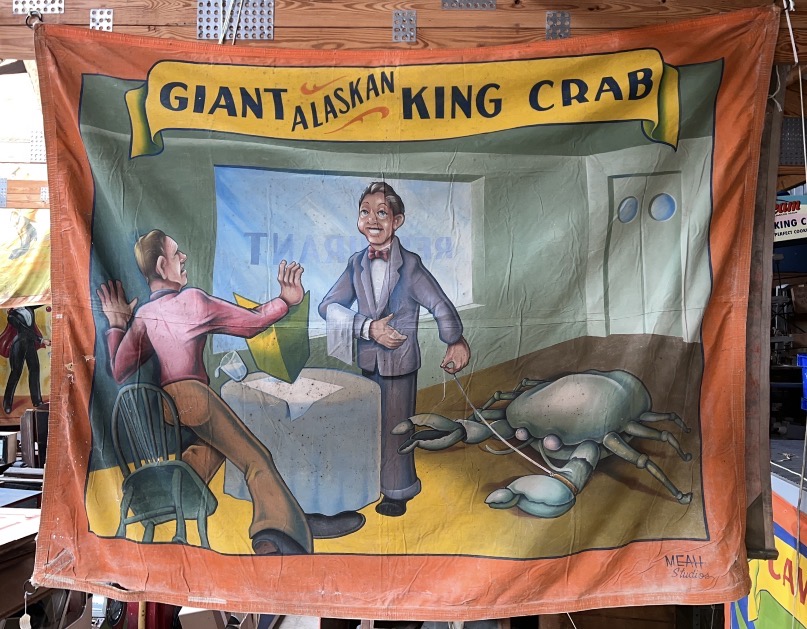
The last of the great traditional banner painters and my co-author on Painters of the Peculiar. Johnny is also a legendary sideshow performer known as the “Czar of Bizarre.” His work hangs in the Smithsonian, the Barnum Museum, and private collections worldwide. Working directly with Johnny gave me an education in banner art that no book could provide.
Other Names That Surface
Collectors may also encounter work by H.D. Cummins, Bobby Wicks, Cad Hill and Hill & Shafer Studio, Mark Frierson, Sigmund Bock, E.H. Caldwell, George Bellis, and others. Some of these artists are extremely rare, and proper identification requires deep knowledge of each painter’s era, techniques, and working history.
Why Identification Is Harder Than You Think
Most people assume that identifying a banner artist is as simple as reading the signature. It’s not and here’s why:
- Signatures can be incorrect. A signature on a banner does not always confirm the artist. I’ve personally seen banners with signatures that were more like studio signatures rather than artist signatures.
- Studios employed multiple painters. A banner stamped “Sigler, Tampa” or marked with the O. Henry Tent and Awning name might have been painted by any of several artists working in that shop.
- Styles overlap. Artists who mentored each other or worked side by side share visual similarities that can fool even experienced collectors.
- Subject matter or the star of a banner shifts by era. Knowing what types of acts or people who headlined in banners that were around in different decades can help date a banner, but using those clues correctly requires deep historical knowledge of the sideshow world.
- Condition obscures details. Fading, repairs, overpainting, and damage can hide or alter the very details needed for accurate identification.
Proper identification goes far beyond the painted image. It considers lettering style, color choices, composition patterns, border treatments, physical construction details like grommets and stitching, canvas type, studio markings, provenance, and historical context. Each artist left behind a fingerprint but reading it takes years of hands-on experience.
The Cost of Getting It Wrong
A misidentified banner doesn’t just affect one transaction. It can:
- Cost a buyer thousands if they overpay for a banner attributed to a higher-value artist
- Cost a seller thousands if they unknowingly sell a rare artist’s work as “unknown” or misattributed
- Damage the market when fakes or misattributions establish false price comparisons
- Undermine trust between collectors, dealers, and auction houses
I’ve seen all of these happen. It’s why I wrote Painters of the Peculiar with Johnny Meah, to bring real scholarship and documentation to a field that needed it.
Get Your Banner Identified — Free
If you own a vintage sideshow banner and want to know who painted it, what it’s worth, or whether it’s authentic — I can help.
The Sideshow Banner Exchange offers free, appraisals of any sideshow banner, from any artist.
Whether you’re looking to buy, sell, insure, or simply understand what you have, getting an expert opinion is the smartest first step.
Here’s how to reach us:
- Website: Submit your banner through our online form
- Email: michaelpapa121@gmail.com
- Phone: 518-774-6234
We buy banners, take consignments, and also offer professional restoration services to preserve these irreplaceable pieces of American art history.
Want to Learn More?
Pick up a copy of Painters of the Peculiar: A Guide to Sideshow Banner Artists & Their Respective Work — the definitive identification guide, co-authored by myself and the legendary Johnny Meah. It covers all the major artists with biographies, identification details, and stories from a lifetime inside the sideshow world.
Available at paintersofthepeculiar.com
Sideshow banners are a uniquely American art form — born on the carnival midway, created by self-taught masters who never imagined their work would hang in museums. If you’ve got one, don’t guess. Get it right.